
Plant D3 K2 Review Overview
Plant D3 K2 offers a unique combination of vitamin D3 and K2, both derived from plant-based sources. This supplement may support bone health and immune function, leveraging the bioactive forms of these essential vitamins. The inclusion of a prebiotic superfood complex further enhances its appeal. However, its higher price point and potential interactions with certain medications should be considered.
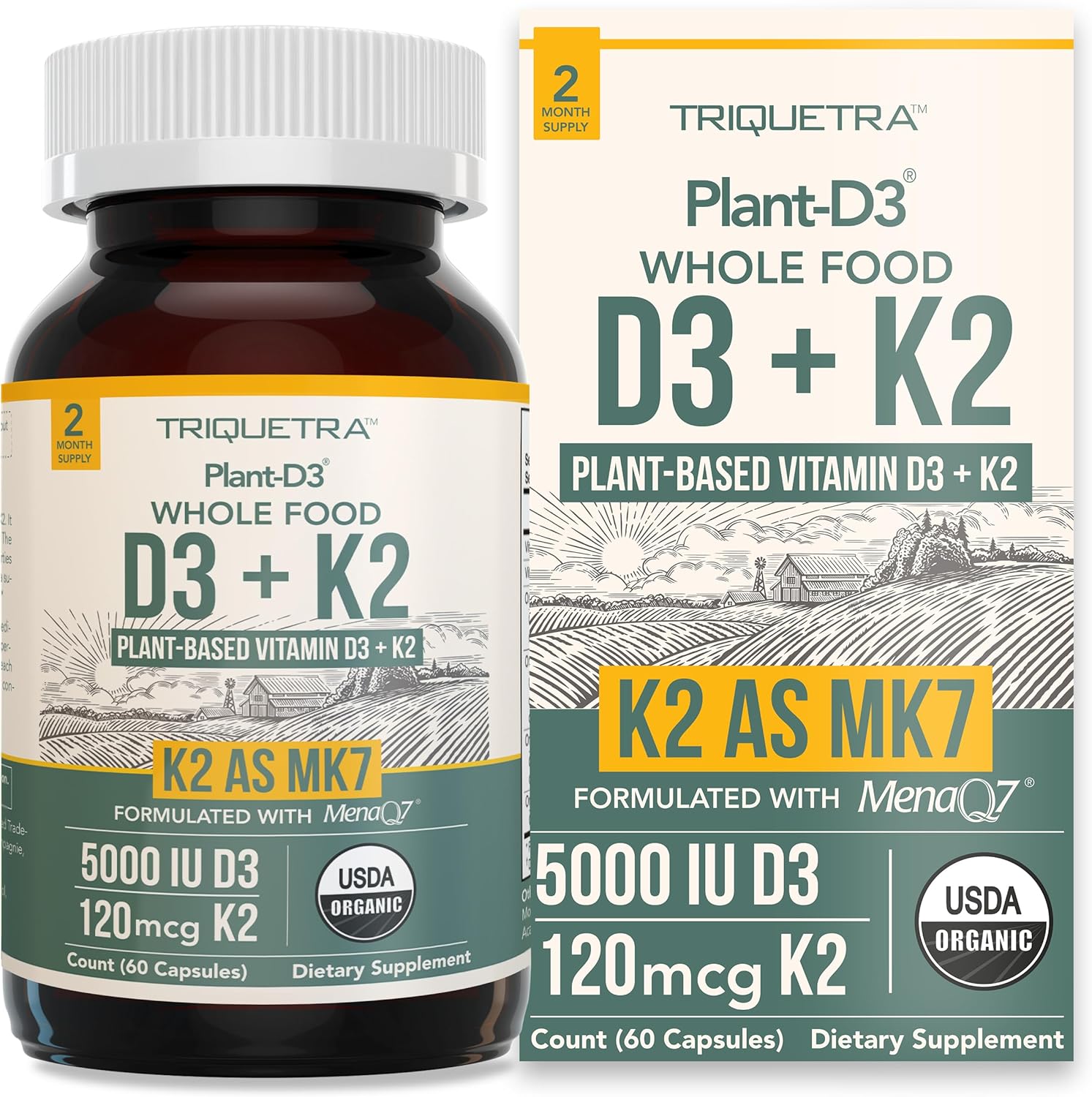
Plant D3 K2: Organic Vitamin Supplement
ORGANIC, WHOLE FOOD & PLANT-BASED D3 & K2 (MK7): Plant-D3 is Organic Vitamin D3 derived from sun-grown algae delivered in the optimal Cholecalciferol form. Our K2 is in MK7 is the superior all-Trans form. MAX…
Ingredient Analysis
The Plant D3 K2 supplement utilises vitamin D3 derived from organic algae, presented in the Cholecalciferol form, known for its superior bioavailability. The vitamin K2 is provided as All-Trans MK7 from MenaQ7®, which is sourced from chickpeas. This form of K2 is recognised for its enhanced absorption and efficacy compared to other forms, such as the cis form, which is less bioactive. The inclusion of a superfood complex with prebiotic ingredients, ginseng, and matcha tea further supports digestive health and nutrient absorption.
Evidence & Mechanistic Rationale
While marketing claims highlight the benefits of Plant D3 K2, it is essential to compare these with scientific evidence. Research indicates that vitamin D3 and K2 can play complementary roles in supporting bone health and cardiovascular function. The combination of these vitamins may enhance calcium metabolism and bone mineralisation. For further insights into plant-based nutrition, resources such as the Harvard Nutrition Source can provide valuable information.
Practical Use & Suitability
Plant D3 K2 may be particularly beneficial for individuals seeking a plant-based supplement to support bone and immune health. However, those on blood-thinning medications should exercise caution due to the vitamin K2 content. For those interested in a comprehensive plant-based lifestyle, the 12-Week Beginner Plant-Based Journey offers a structured programme to explore plant-based nutrition further.
Pros and Considerations
- High bioavailability of D3 from algae
- All-Trans MK7 form of K2
- Includes prebiotic superfood complex
- Higher price point
- Potential interaction with blood thinners
- Limited availability in stores
Final Verdict
Plant D3 K2 presents a well-formulated option for those seeking plant-based vitamin supplementation. Its use of bioactive forms of D3 and K2 enhances its efficacy, though the cost and potential interactions should be carefully considered. Check price on Amazon
FAQ
What are the benefits of Plant D3 K2?
As a plant-based nutrition scientist, I analyze the synergy of D3 and K2 as a biological partnership where the sum is far greater than its parts. While Vitamin D3 facilitates the absorption of calcium, Vitamin K2 acts as the “molecular architect” that tells that calcium where to go.
1. Enhanced Bone Mineral Density
The primary benefit of this duo is the regulation of bone metabolism.
-
Calcium Transport: Vitamin D3 increases the absorption of calcium from the intestines into the bloodstream.
-
Protein Activation: Vitamin K2—specifically in the All-Trans MK7 form—activates osteocalcin, a protein that binds calcium directly into the bone matrix.
-
Structural Integrity: Together, they ensure that bones remain dense and strong, rather than brittle, by optimizing mineral utilization.
2. Cardiovascular and Arterial Protection
Taking D3 without K2 can occasionally be counterproductive for heart health; the pairing is essential for arterial safety.
-
Calcification Inhibition: K2 activates Matrix Gla Protein (MGP), which prevents calcium from depositing in the soft tissues and arteries.
-
Arterial Elasticity: By keeping calcium out of the vascular system, this combination supports healthy blood flow and long-term cardiovascular resilience.
3. Comprehensive Immune Modulation
Beyond bone health, Vitamin D3 functions as a potent secosteroid hormone that influences the immune system.
-
Pathogen Defense: D3 enhances the pathogen-fighting effects of monocytes and macrophages—white blood cells that are important parts of your immune defense.
-
Inflammatory Balance: It helps regulate the body’s inflammatory response, ensuring the immune system reacts appropriately to external threats.
4. Muscle Function and Performance
For those leading active plant-based lifestyles, the D3 K2 combination is a vital recovery tool.
-
Cellular Health: Vitamin D receptors are found throughout the body, including in muscle cells, where they support muscle protein synthesis and contraction.
-
Strength and Stability: Adequate levels of D3 are associated with improved muscle strength and a reduced risk of falls, particularly as we age
.
How does the bioavailability of Plant D3 K2 compare to other forms?
As a plant-based nutrition scientist, I evaluate bioavailability through the lens of molecular structure and clinical efficacy. The combination of algal-derived D3 and All-Trans MK7 represents the current gold standard for plant-based supplementation, offering parity with—and in some cases, advantages over—animal-derived counterparts.
1. Algal Cholecalciferol (D3) vs. Ergocalciferol (D2)
Historically, plant-based diets relied on Vitamin D2 (Ergocalciferol) sourced from UV-exposed fungi. However, research consistently shows that Vitamin D3 (Cholecalciferol) is significantly more effective at raising and maintaining total serum 25(OH)D levels.
-
Potency: Algal D3 is chemically identical to the D3 produced in human skin and that found in lanolin (sheep’s wool).
-
Duration: D3 has a higher affinity for Vitamin D-binding proteins, giving it a longer half-life in the bloodstream compared to D2.
-
Source: By using lichen or algae-derived D3, you bypass the inferior D2 pathway while remaining 100% vegan.
2. The “All-Trans” MK7 Advantage
Vitamin K2 is essential for directing calcium away from the arteries and into the bones. However, not all MK7 (Menaquinone-7) is created equal.
-
Geometric Isomers: MK7 exists in two shapes: trans and cis.
-
Bioactivity: Only the All-Trans isomer fits into the body’s enzyme receptors. Many synthetic K2 supplements contain a mixture of both, but the cis form is biologically inactive, essentially providing “empty” milligrams.
-
Longevity: MK7 has a much longer half-life (roughly 72 hours) than MK4, ensuring a stable level of the vitamin is available to activate osteocalcin around the clock.
3. Synergistic Absorption
Bioavailability isn’t just about the form; it’s about the delivery.
-
Lipid Solubility: Both D3 and K2 are fat-soluble. To maximize absorption, these should be delivered in a base of healthy fats (like MCT oil or olive oil) or taken with a fat-containing meal.
-
The Calcium Connection: D3 increases calcium absorption from the gut, while K2 ensures that calcium is utilized correctly. Without K2, high-dose D3 can lead to “calcification” of soft tissues, making the functional bioavailability of the pair more important than either vitamin alone.
Is Plant D3 K2 suitable for vegans?
Yes, Plant D3 K2 is suitable for vegans as it is derived from plant-based sources and is USDA Organic certified.
How should I take Plant D3 K2 for best results?
As a nutrition scientist, I always emphasize that how you take a supplement is just as critical as the formulation itself. To maximize the metabolic path of Algal D3 and All-Trans MK7, we need to optimize the physiological environment for absorption.
1. The Necessity of Dietary Fat
Both Vitamin D3 and Vitamin K2 are lipophilic (fat-soluble) molecules. They do not dissolve in water and require the presence of dietary lipids to be packaged into micelles for transport across the intestinal lining.
-
The “Meal” Factor: Taking your capsule with a meal containing healthy fats—such as avocado, nuts, seeds, or olive oil—can increase Vitamin D absorption by up to 32% to 50%.
-
Bile Activation: Fat triggers the release of bile, which is essential for emulsifying these vitamins so they can be absorbed into the lymphatic system.
2. Strategic Timing: Morning vs. Evening
While you can take D3 K2 at any time, many practitioners (myself included) recommend morning or midday administration.
-
Circadian Rhythm: Vitamin D is inversely related to melatonin, our sleep hormone. High-dose Vitamin D taken late at night may interfere with melatonin production in some individuals, potentially disrupting sleep quality.
-
Consistency: Linking the supplement to your largest meal of the day (often lunch or a hearty breakfast) ensures a consistent “fat-buffer” for absorption.
3. Synergistic Cofactors (The Magnesium Connection)
This is a detail many brands miss: Vitamin D cannot be metabolized without Magnesium.
-
Activation: The enzymes that convert Vitamin D into its active form in the liver and kidneys are magnesium-dependent.
-
Prevention: If you are deficient in magnesium, Vitamin D can remain stored and inactive, which is why some people see no change in their blood levels despite heavy supplementation. Ensure your diet includes magnesium-rich foods like spinach, pumpkin seeds, and dark chocolate.
4. Hydration and Discipline
-
Water: While the vitamins need fat, the capsule itself requires adequate water to reach the stomach and begin the disintegration process.
-
Daily Rhythm: Because MK7 (the All-Trans form) has a long half-life, maintaining a steady daily “trickle” is more effective for bone and arterial health than taking a massive dose once a week.
Are there any side effects associated with Plant D3 K2?
As a plant-based nutrition scientist, I prioritize safety through a clinical lens. While Vitamin D3 and K2 are physiological essentials, their impact on systemic pathways—specifically blood coagulation and mineral metabolism—requires a nuanced understanding of potential interactions.
1. The Critical Contraindication: Blood Thinners
The most significant safety consideration involves Vitamin K2 (MK7).
-
Mechanism of Action: Vitamin K is the primary regulator of blood clotting (coagulation). It works by activating proteins that help the blood to clot.
-
Anticoagulant Interference: Medications like Warfarin (Coumadin) function as Vitamin K antagonists. Taking K2 can effectively “cancel out” the medication’s intended effect, increasing the risk of dangerous blood clots.
-
Consultation is Mandatory: If you are on any anticoagulant therapy, you must speak with your cardiologist or GP before introducing K2, as they may need to monitor your INR (International Normalized Ratio) more closely.
2. Hypercalcemia Risks
Vitamin D increases the absorption of calcium from your diet. While this is usually beneficial, excessive intake without proper regulation can lead to Hypercalcemia (too much calcium in the blood).
-
The Protective Role of K2: This is exactly why we pair D3 with K2. D3 brings the calcium in, and K2 (via osteocalcin activation) ensures it goes into the bones rather than the arteries.
-
Symptoms to Watch: Very high doses of D3 taken in isolation can occasionally lead to nausea, frequent urination, or thirst. Maintaining the D3/K2 balance significantly mitigates this “soft tissue calcification” risk.
3. Digestive Sensitivity
A small percentage of users may experience mild gastrointestinal shifts when starting a new fat-soluble supplement.
-
Carrier Oils: Sometimes the “side effect” isn’t the vitamin itself, but the carrier oil (like coconut or MCT oil). Taking the supplement with a full meal, as discussed in our absorption protocol, typically eliminates any minor stomach upset or “repeat” (aftertaste).
4. Kidney Function Considerations
Individuals with a history of kidney stones or chronic kidney disease (CKD) should exercise caution.
-
Mineral Balance: Since kidneys are responsible for the final activation of Vitamin D and the regulation of calcium/phosphorus, supplementation should be managed by a healthcare professional in these specific clinical cases
Can Plant D3 K2 be taken with other supplements?
As a plant-based nutrition scientist, I view supplement stacking as a way to create biochemical harmony. While Vitamin D3 and K2 are highly versatile, their effectiveness can be amplified or hindered depending on their “counterparts” in your daily regimen.
1. The Power Couple: Magnesium
If you take only one other supplement with your D3 K2, it should be Magnesium.
-
The Conversion Engine: Vitamin D exists in an inactive state when first absorbed; Magnesium is the essential cofactor required for the enzymes in your liver and kidneys to convert it into the active “hormone” form (calcitriol).
-
Prevention of Depletion: High doses of Vitamin D can actually deplete your body’s magnesium stores as it works to process the D3, which is why some people feel fatigued when starting D3 without magnesium support.
2. Synergy with Omega-3 (Algae Oil)
Since D3 and K2 are fat-soluble, pairing them with your Omega-3 supplement is a strategic move.
-
Built-in Absorption: The healthy fats in Algae Oil provide the perfect delivery vehicle (micelle formation) for D3 and K2, ensuring they cross the intestinal barrier efficiently.
-
Cardiovascular Defense: While Omega-3s support heart health by managing inflammation, K2 supports it by preventing arterial calcification, creating a comprehensive “heart-healthy” stack.
3. Considerations with Multivitamins and Calcium
-
Avoiding Overlap: Many high-quality plant-based multivitamins already contain Vitamin D3. Always check your labels to ensure your total daily intake aligns with your blood test results to avoid unnecessary excess.
-
The Calcium Balance: If you take a separate Calcium supplement, K2 becomes even more critical. K2 acts as the “traffic cop,” ensuring that the additional calcium is directed into your bones rather than settling in your arteries or kidneys.
What makes the All-Trans MK7 form of K2 superior?
As a plant-based nutrition scientist, I look at the molecular geometry of a nutrient to determine its true efficacy. The distinction between “All-Trans” and “Cis” isomers is the difference between a key that fits the lock and one that is simply taking up space.
1. Molecular Geometry and Bioactivity
Vitamin K2 (Menaquinone-7) exists in two distinct chemical shapes: trans and cis.
-
The “Fit” Factor: The human body is highly selective. Only the All-Trans isomer has the specific linear shape required to bind to the enzymes responsible for carboxylation.
-
Active vs. Inactive: While the cis form is chemically Vitamin K2, it is biologically inactive. It circulates in the blood but cannot activate the proteins (like Osteocalcin and Matrix Gla Protein) that manage calcium.
-
Superiority: The All-Trans form is considered superior because it is 100% bioactive, ensuring every microgram you ingest is capable of supporting bone and arterial health.
2. Unmatched Half-Life and Stability
The MK7 form is already known for its longevity in the body compared to MK4, but the All-Trans version maximizes this advantage.
-
72-Hour Window: All-Trans MK7 remains in the bloodstream for up to three days. This allows for a stable, consistent level of Vitamin K2 to be available to peripheral tissues like bones and blood vessels.
-
Cumulative Effect: Because it stays in the system longer, it is more effective at building up “therapeutic levels” over time compared to shorter-lived forms.
3. Systematic Calcium Redirection
The “Superiority” of All-Trans MK7 is best measured by its clinical outcome: The Calcium Paradox.
-
Bone Density: It effectively activates osteocalcin, which acts like a biological “glue” to lock calcium into the bone matrix.
-
Arterial Protection: Simultaneously, it activates Matrix Gla Protein (MGP), the most potent inhibitor of soft-tissue calcification. By staying in the “Trans” configuration, it ensures calcium doesn’t deposit in your arteries.
